How to Talk to Difficult People: A High Achiever’s Playbook to Stay Centered, Lead the Room, and Win the Moment
How to Talk to Difficult People: A High Achiever’s Playbook to Stay Centered, Lead the Room, and Win the Moment
Difficult people are everywhere. And sometimes, if we’re honest, it’s us. High achievers don’t waste cycles trying to control other people. They master their response, protect their energy, and reset the tone. You can’t change their personality on demand, but you can control your presence, your questions, and your boundaries. That’s real power.
Here’s your practical playbook for the most common tricky behaviors and how to respond with calm authority.
The Insulter and Belittler They take shots at your intelligence, toss patronizing jabs, then hide behind “Just joking.” How to respond: Make them repeat it: “Can you say that again?” It deprives the insult of drama and forces them to hear their own words out loud. Most walk it back. Hold silence for 5–7 seconds. No reaction, no fuel. The quiet does the work. Question intent: “Did you mean that to be embarrassing?” People rarely want to own malice; they usually adjust the tone.
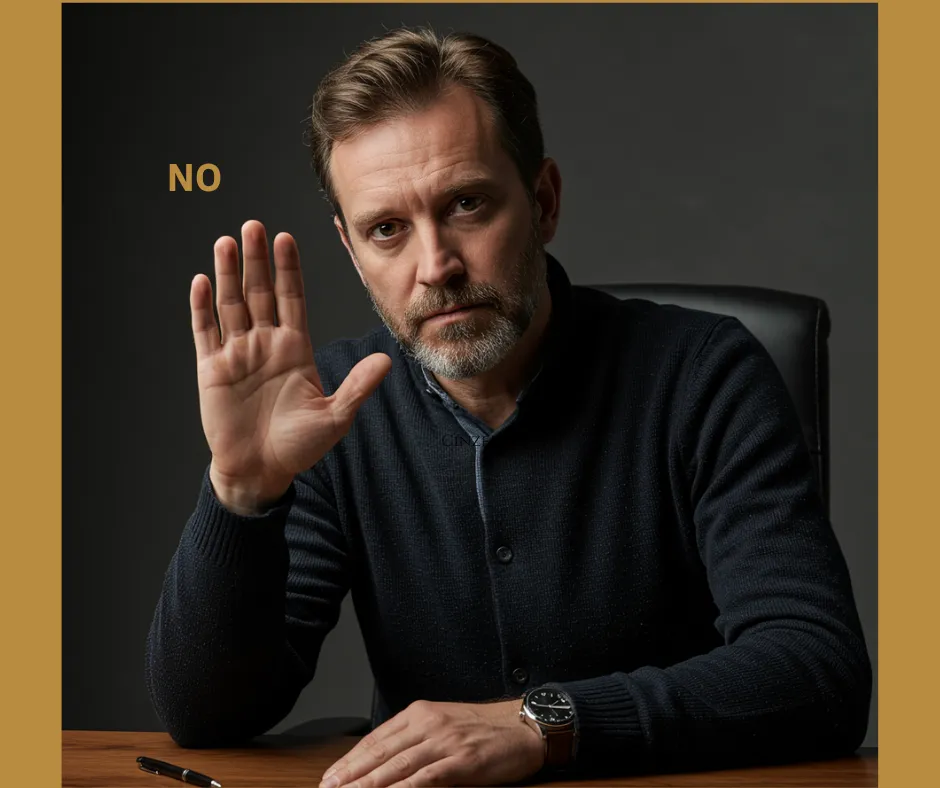
The Interrupter and Talker-Over They jump in mid-sentence, dominate airtime, and steamroll meetings. How to respond: Let the first interruption go. Don’t escalate. On the second, use their name and state the boundary: “Doug, I can’t hear you when you interrupt me.” Calm, direct, firm. Finish your point once the floor returns. You’re training the room on standards without drama.
The Always-Has-To-Be-Right Every idea they have is the only right one. They turn conversations into contests. How to respond: Ask, “What information would you need to change your mind?” or “What would you need to hear to see it differently?” If the answer is “nothing,” you’ve identified a dead end. Stop overinvesting. Redirect to decisions, data, or next steps.
The Passive Aggressor Side-door comments, loaded phrases, and “Must be nice…” energy. How to respond: Invite directness without heat: “Sounds like there’s more to that.” “Should I read into that?” You’re opening the front door. Most people step through it or stand down. Don’t meet passive with aggressive; meet it with clarity.
The Gaslighter They challenge your reality: “You’re remembering it wrong.” “That never happened.” How to respond: Anchor to your truth without arguing: “I remember it differently.” “That wasn’t my experience.” Repeat as needed. You’re not debating; you’re staying grounded. You can’t force someone to validate your memory, but you can refuse to abandon it.
The Narcissist It’s a rigged game of praise or provoke. They twist, escalate, and recenter everything on them. How to respond: Don’t engage the loops. Keep replies short and neutral: “Noted.” “I get it.” Rein in expectations. Don’t seek what they can’t give. Protect your energy and move the conversation to clear agreements or exit points.
The One-Upper Whatever you did, they did bigger, faster, better. It’s insecurity in performance gear. How to respond: Don’t feed it. Ask about meaning instead of metrics: “What did you learn?” Then calmly return to your point: “For me, it was…” You’ve shifted the frame from comparison to insight.
Core principles that keep you leading: Own your state. Negative people don’t get to run your nervous system. Use the moment to test composure, presence, and patience. That’s high performance in real time . Empathize without absorbing. You don’t know their morning, their pain, or their story. Respect the human; refuse the drama . Shift the energy. Humor, appreciation, and a clear tone can raise the room without calling anyone out. That’s leadership, not lecture . Enroll with a direct request. “Can we keep this respectful and solution-focused?” Setting the standard often resets the room .
You won’t control every personality, and you don’t need to. Control your responses, protect your standards, and choose influence over impulse. When you master that, you change the conversation—and often, the outcome.